
She Is The Tree: Ida B. Wells, Harriet Jacobs, and the Women Who Refused Silence
Ida B. Wells: She Is The Tree
Ida B. Wells stood tall in a world determined to cut her down. A fearless journalist, anti-lynching activist, and unapologetic truth-teller, Wells became one of the most dangerous women in America—dangerous because she refused to be silent, refused to accept comfortable lies, and refused to let the nation forget the horrors of racist violence. She was a voice that could not be silenced, a witness whose documentation of lynching exposed the mythology that sustained it.
Wells didn't just report on injustice—she investigated it, interviewed survivors and witnesses, gathered data, and published her findings with meticulous precision. Her work in publications like the Memphis Free Speech and her pamphlet Southern Horrors presented irrefutable evidence of lynch mob violence. She showed that lynching was not justice; it was terrorism. She revealed that it was not always about protecting white women, as the mythology claimed, but about suppressing the economic and political power of African American communities. Wells paid a price for her activism—her newspaper was destroyed, she received death threats, and she was forced to flee the South. Yet she never stopped speaking. She never stopped writing. She never stopped bearing witness.
What makes Ida B. Wells a tree is the way her branches extend through generations. Her voice, her courage, her refusal to compromise became a model for every activist who came after her. She understood that activism required documentation, that truth required witnesses, and that silence was complicity. She stood rooted in principle and grew stronger with every attack. She is the tree because she became structural—something the movement could depend on, something that provided shelter and strength to all who sought justice.
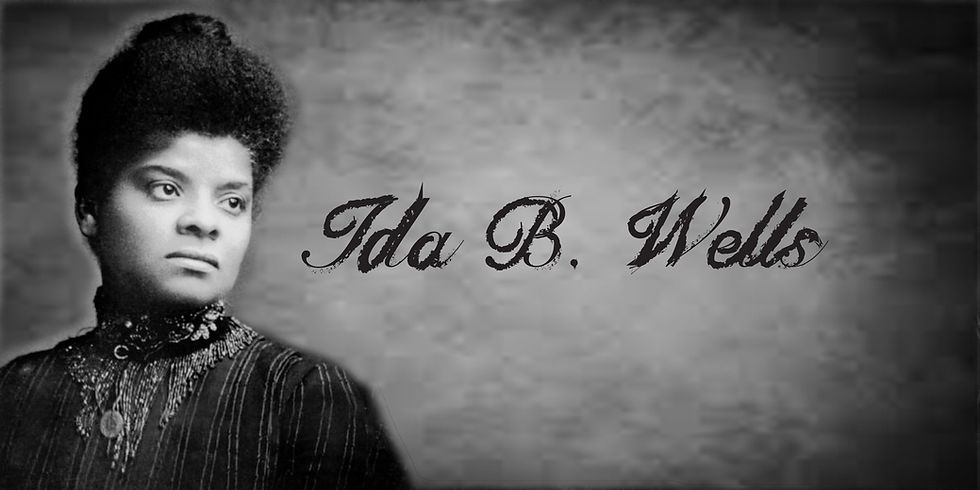
She Is The Tree: The Root of Resistance and Voice
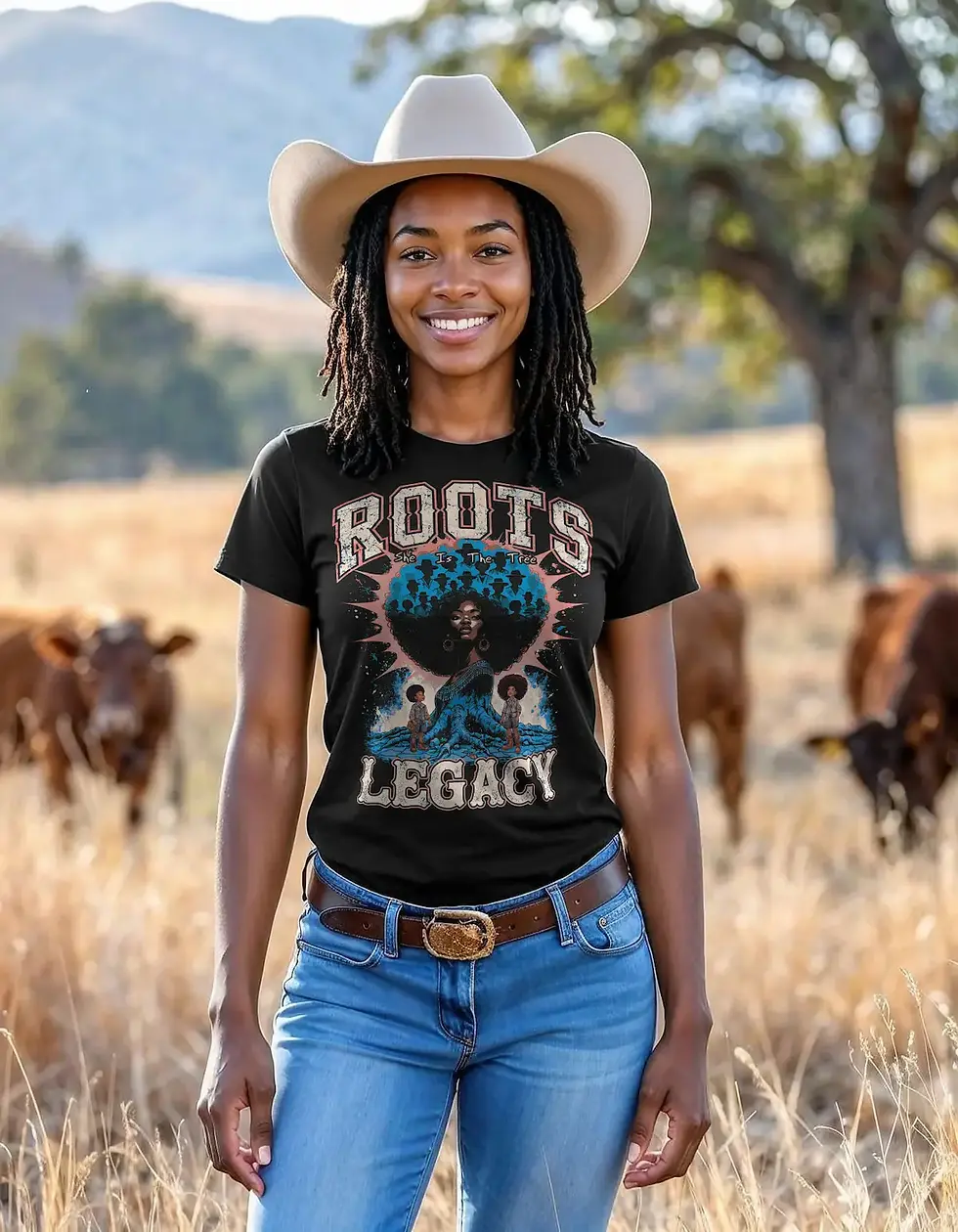
She Is The Tree honors Ida B. Wells and celebrates Black women as the foundations upon which movements grow. This design features a woman with a magnificent afro rendered as a massive tree, with children gathered beneath her branches seeking knowledge, safety, and truth. The imagery captures Wells' role as a nurturer of justice, a keeper of truth, and a woman whose presence and voice became shelter for those fighting against darkness.
When you wear She Is The Tree, you wear the consciousness of a woman who understood that activism requires courage, that documentation is power, and that a single voice raised in truth can shake the foundations of injustice. You join a lineage of Black women whose very presence is transformative, whose voices echo through generations, and whose commitment to truth-telling shapes the future.
Design Details: Design Details: "ROOTS" in large collegiate block letters across the top, "LEGACY" across the bottom. Central figure with a magnificent afro rendered as a living tree, figures gathered beneath the branches at the roots. Teal and blue halo accent radiating behind the afro. Cream and distressed off-white lettering on a black background. Detailed linework with painterly shading. Melanated figure rendered with power, dignity, and presence.
SHOP SHE IS THE TREE: She Is The Tree SS Tee Ida B. Wells | Cody Wayne Jeans
Harriet Jacobs: Black Roots
While Ida B. Wells was documenting injustice in journalism, another woman was using autobiography and testimony as a weapon against slavery itself. Harriet Jacobs spent seven years hiding in an attic—a space so small she could barely move—to escape the sexual violence of her enslaver. And then she did something extraordinary: she wrote about it. Her autobiography, Incidents in the Life of a Slave Girl, became a groundbreaking testimony to the specific horrors African American women faced under slavery, horrors that had been largely absent from abolitionist discourse.
Jacobs was a witness to slavery's most intimate brutalities—the sexual exploitation, the threats to her children, the impossible choices enslaved women were forced to make. And she refused to let that testimony die with her. She wrote under a pseudonym, not out of shame, but out of strategic protection. She wrote with precision and emotional honesty about what it meant to be an enslaved woman, about motherhood under bondage, about the courage it took to resist. Her voice challenged the dominant narratives about slavery and forced readers to confront truths they had preferred to ignore.
What makes Harriet Jacobs a crucial voice is her understanding that testimony is power. By speaking her truth, by documenting her experience, by refusing to disappear her own pain into abstraction, she created a record that would survive and speak across centuries. She understood that the most dangerous thing an enslaved person could do was tell the truth about enslavement. She did it anyway.
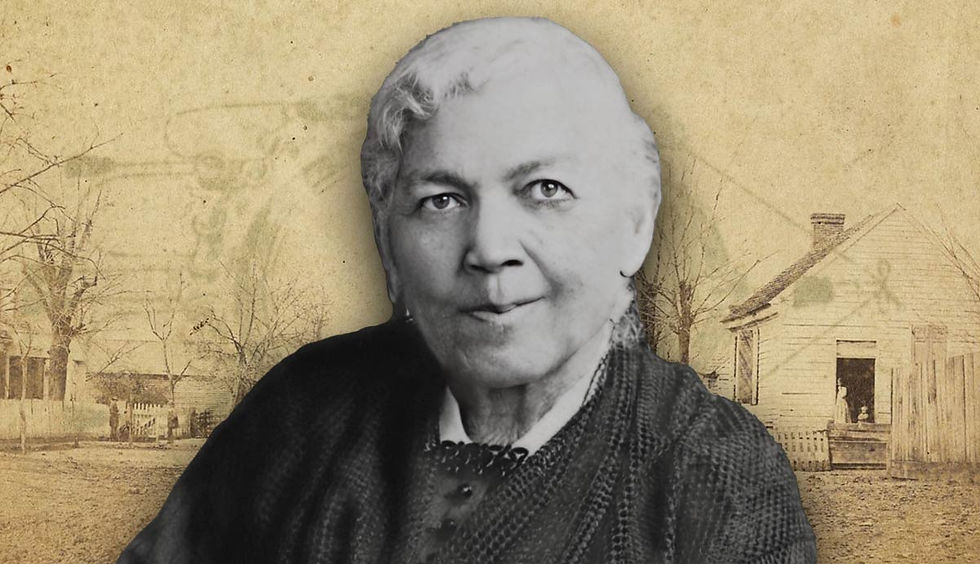
Black Roots: The Foundation and the Witness
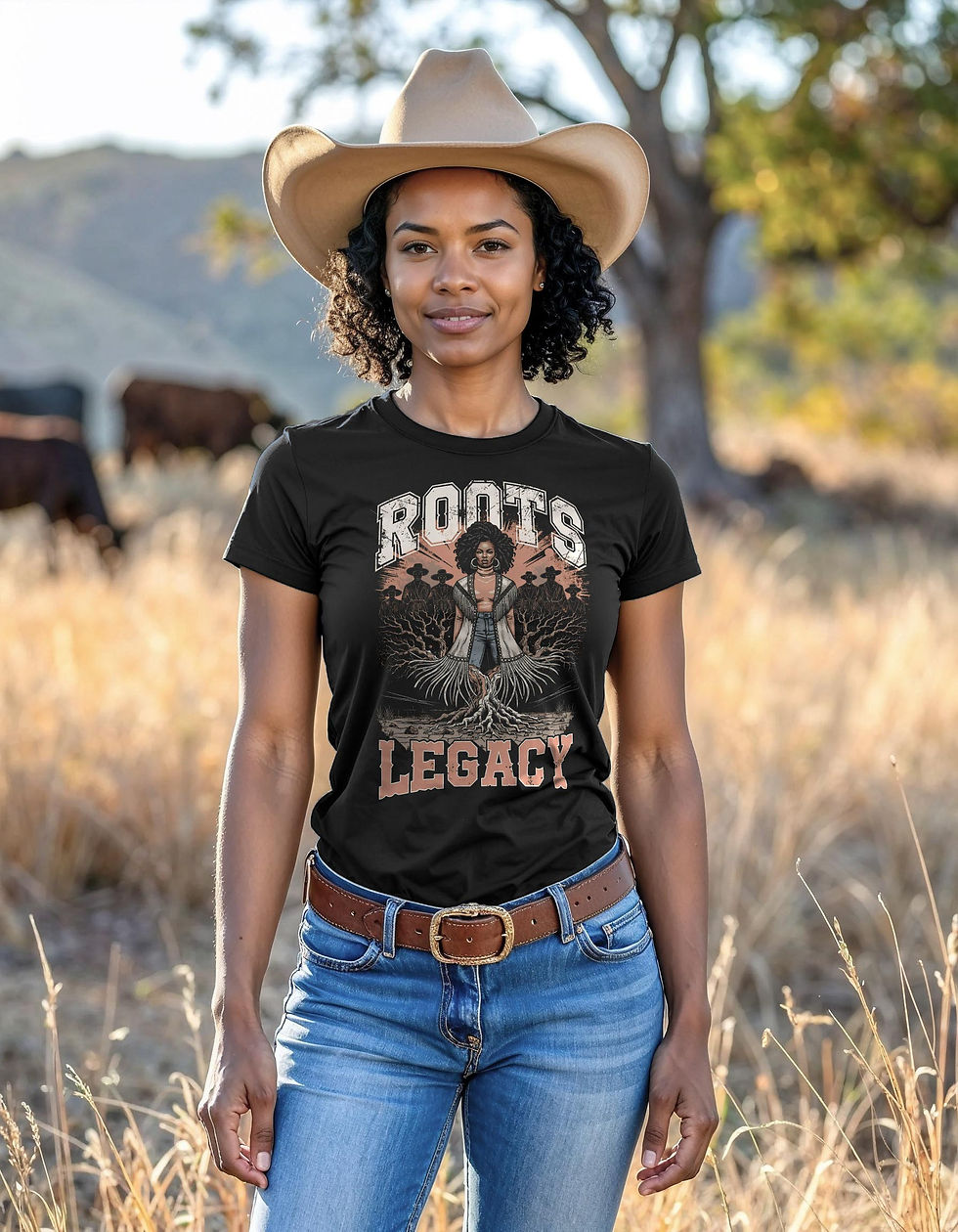
Black Roots celebrates Harriet Jacobs and all the women who became witnesses to injustice through their own survival and testimony. This design features a woman standing as an anchor, surrounded by ancestral figures and witnesses looking toward her—a visual testament to the power of individual voices to hold space for collective truth. The imagery honors women whose refusal to be silent became a foundation upon which movements could build.
When you wear Black Roots, you wear the courage of a woman who hid for seven years and then wrote her own story. You wear the consciousness of someone who understands that testimony is resistance, that voice is power, and that the act of speaking truth is itself an act of liberation. You affirm that these roots run deep, that they sustain us, and that they connect us to generations of witnesses who refused to disappear.
Design Details: Design Details: "ROOTS" in large collegiate block letters across the top, "LEGACY" across the bottom. Central figure standing as an anchor with roots spreading beneath, surrounded by ancestral and community figures. Warm rust, tan, and earth-brown tones. Cream and distressed off-white lettering on a black background. Detailed linework showing interconnection and community. Melanated figures rendered with strength and intergenerational connection.
SHOP BLACK ROOTS: Black Roots SS Tee Harriet Jacobs | Cody Wayne Jeans
Zora Neale Hurston: Where We Come From
In the early 20th century, while Wells was fighting lynching and Jacobs' words were beginning to circulate, another woman was engaged in her own act of witnessing and preservation. Zora Neale Hurston was an anthropologist and writer who understood that culture itself is power. She traveled throughout the American South, documenting the folklore, language, music, and spiritual practices of African American communities. She understood that the dominant culture wanted to erase that heritage, to render it invisible, to treat it as less valuable than European traditions. So she became a witness to what might otherwise be lost.
Hurston's work—her novels, her anthropological studies, her documentation of folklore—was an act of resistance through preservation. When she wrote Their Eyes Were Watching God, she wrote in the language of her people, refusing to code-switch for white approval. When she collected folklore and spiritual traditions, she was saying: this matters. This is valuable. This is us. She understood that witnessing culture is not passive; it is an active choice to honor, preserve, and celebrate what powerful institutions want to diminish.
What makes Zora Neale Hurston essential to this lineage is her understanding that activism takes many forms. It's not just confronting injustice head-on; it's also preserving what oppressive systems want to destroy. It's testifying to beauty, to resilience, to the richness of a people's cultural life. It's saying to future generations: Where we come from matters. How we speak, sing, love, and believe—it all matters. Remember.

Where We Come From: The Origin Story and the Witness
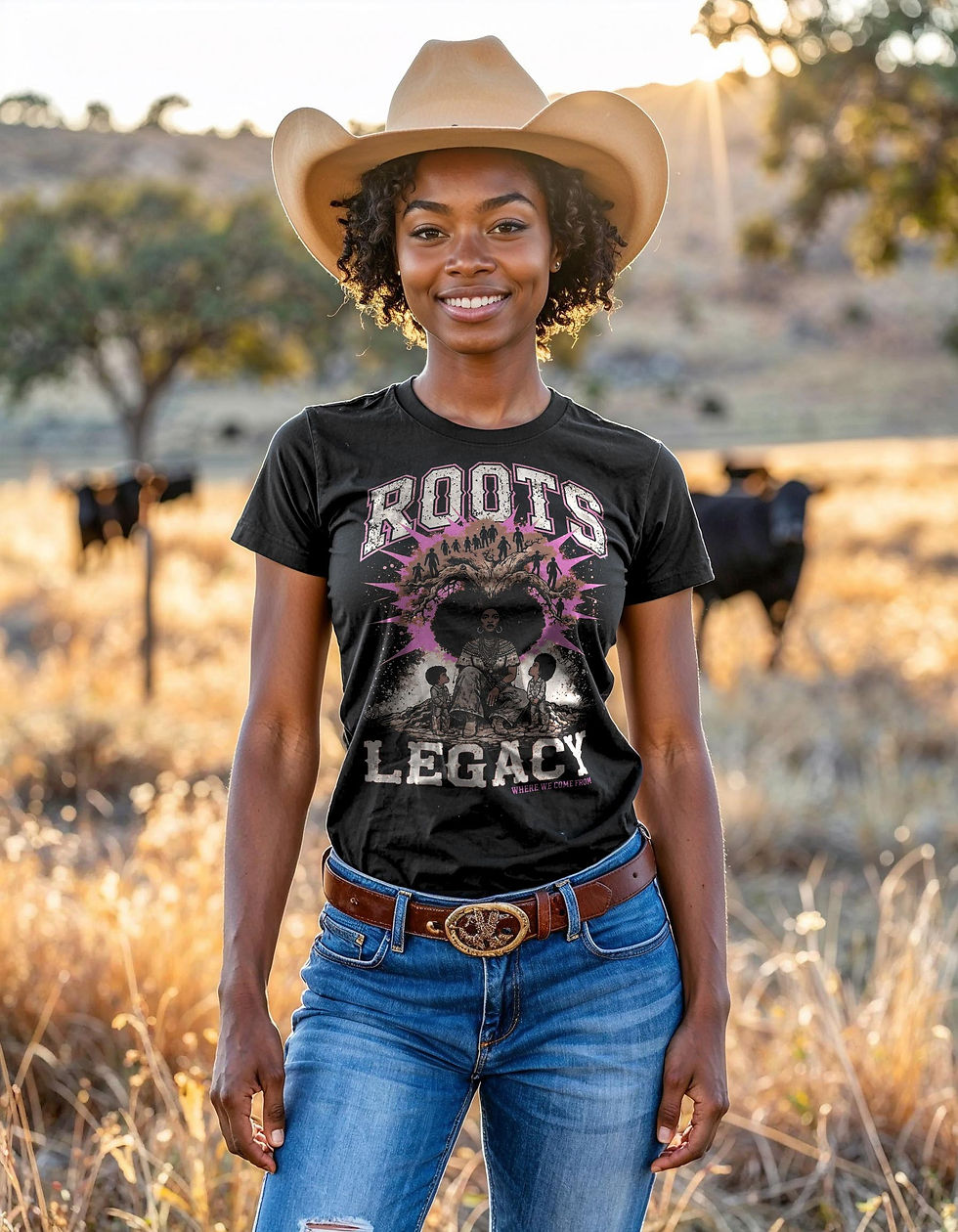
Where We Come From honors Zora Neale Hurston and celebrates the women who witness culture, preserve it, and pass it forward. This design features an intergenerational community gathered together, with roots beneath them and a sense of ancestral presence—a visual reminder that we come from somewhere, that our culture is a gift, and that witnessing and preserving that culture is an act of love and resistance.
When you wear Where We Come From, you wear the consciousness of a woman who understood that documenting culture is activism. You celebrate the traditions, language, music, and spiritual practices that were passed down to you. You affirm that the way you speak, the way you move, the way you love and believe—it all comes from somewhere powerful. You witness your own culture forward.
Design Details:Design Details: "ROOTS" in large collegiate block letters across the top, "LEGACY" across the bottom. Central figure framed by a magenta and purple starburst, intergenerational figures gathered below with roots visible beneath. Magenta and pink accents against a black background. Cream and distressed off-white lettering. Detailed linework showing texture, connection, and movement. Melanated figures rendered with warmth, dignity, and presence.
SHOP WHERE WE COME FROM: Where We Come From SS Tee Zora Neale Hurston | Cody Wayne Jeans
The Voices & Witnesses: Three Women Who Refused Silence
These three women—separated by decades but united in their refusal to disappear—form a coherent lineage of voices and witnesses. Ida B. Wells, who documented lynching with meticulous precision. Harriet Jacobs, who testified to slavery's intimate brutalities through her autobiography. Zora Neale Hurston, who witnessed and preserved a people's culture with love and intention. Each understood that silence serves the oppressor, and that speaking—whether through journalism, autobiography, or cultural documentation—is an act of resistance and power.
She Is The Tree, Black Roots, and Where We Come From form a complete narrative of women as witnesses, as keepers of truth, and as bridges between generations. Together, they tell the story of a people who refused to be erased, who insisted on telling their own stories, and who understood that voice is power. These women proved that the most radical act is testimony—the refusal to let injustice, suffering, or culture be forgotten.
When you wear these tees from the Roots & Legacy Collection, you wear the spirit of witnesses. You honor those who spoke when silence was safer. You affirm your own commitment to truth-telling, to cultural preservation, and to passing forward the stories and knowledge of your people. You declare: I am a witness. I am a voice. I will not be silent. I will testify to what I know to be true.

Comments